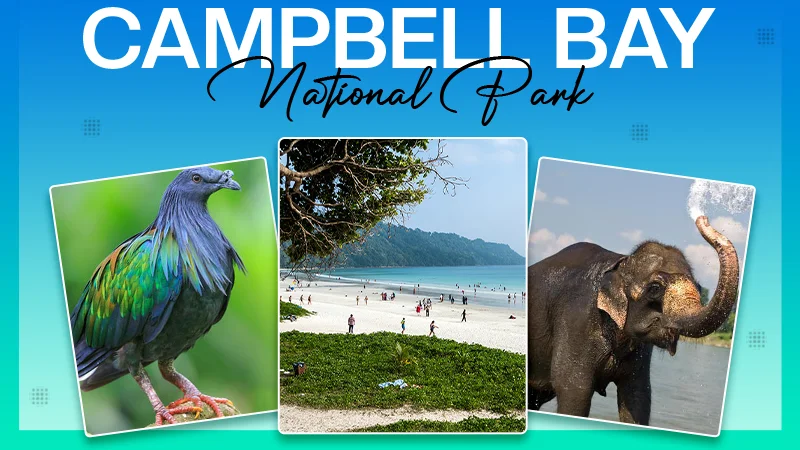
The biodiversity of the Andaman and Nicobar Island Groups is an eclectic melting pot of the world’s plants and animals, surpassing the rest of India in shades of richness and diversity. These subtropical islands, situated in the Bay of Bengal, have a large amount of rainforest and wetlands, making them a popular destination for travelers exploring Andaman tour packages. In addition to birds, mammals, reptiles, amphibians, fishes, mollusks, corals and other marine animals.
There is another extensive variety of life found in these islands, such as the Mangrove vegetation and the multitude of coral reefs. These ecosystems contain a large number of species that are endemic to these islands, attracting tourists through options like Andaman family tour packages.
Flora and Fauna of Andaman and Nicobar Islands: A Complete Overview
Isolated for millennia in the heart of the Bay of Bengal, the Andaman and Nicobar Islands serve as a living laboratory of evolution, boasting species found nowhere else on Earth. Many of the species that live in this region do not exist anywhere else in the world, making it a prime attraction for travelers booking Andaman luxury packages.
The following represents some of the most important aspects of the biodiversity of the Andaman and Nicobar Islands:
- Approximately two thousand two hundred varieties of plants (including tropical trees, orchids and ferns).
- Approximately two hundred seventy species of birds. Many of these birds are found only on the islands.
- Significant numbers of marine life, including corals, sea turtles and fish.
- Mammals and reptiles adapted to the island ecosystem.
National parks, wildlife sanctuaries and marine reserves have been established to protect the region’s biodiversity, making the Andaman and Nicobar Islands one of the most ecologically important areas of India, often explored through Andaman group packages.
Types of Forests and Natural Vegetation of Andaman and Nicobar Islands
The dominant types of vegetation found in the Andaman and Nicobar Islands are tropical, evergreen types of vegetation, as they receive a high level of precipitation and humidity. The forests of the Andaman and Nicobar Islands contain many layers and are also very diverse, making them ideal for travelers opting for Andaman budget packages.
Evergreen Forests:
- Nourished by heavy tropical rains, these evergreen canopies remain lush year-round.,
- Have a canopy that is dense, because they contain a lot of tall trees such as padauk, gurjan, and satinwood,
- Contain various species of birds, insects, and reptiles.
Semi-Evergreen Forests:
- These forests contain both evergreen and deciduous types of trees,
- Found in slightly drier regions,
- Have a great amount of biodiversity and plant variation.
Moist Deciduous Forests:
- Have trees that lose their leaves seasonally
- Have a lower density of trees compared to evergreen forests,
- Provide habitat for small mammals and herbivores.
Mangrove Forests:
- Located near the shores of coastal areas and creeks,
- Protect the shoreline from erosion,
- Provide breeding areas for fish and crustaceans.
Littoral and Swamp Forests:
- Occur near beaches and areas that are affected by tides,
- Are adapted to grow in conditions where there is saltwater present,
- Have species of plants such as coconut palms and prickly leaves (pandanus).
Vegetation in the Andaman and Nicobar Islands
- Abundant amounts of medicinal plant species,
- Rare orchids and flowering plant species,
- Dense undergrowth and/or shrubs, which provide homes for insects and reptiles.
Fauna of Andaman and Nicobar Islands
The wildlife in the Andaman & Nicobar Islands is just as exciting as the scenery. The islands contain a wide variety of animals that inhabit land, air, and sea. One of the important characteristics of wildlife in the Andaman & Nicobar Islands is that they contain many endemic species, making them highly attractive for travelers coming from different regions via Delhi to Andaman tour packages.
Mammals
The following are examples of mammals found on Andaman and Nicobar Islands:
- The Andaman Wild Pig is an endemic mammal found only in these tropical islands.
- The Nicobar Tree Shrew is also an endemic animal; it is small in nature and only exists on these islands.
- Lastly, the Dugong (or Sea Cow) is an endangered marine mammal native to the waters off the Nicobar Islands.
Birds
Some common birds found on Andaman and Nicobar Islands include:
- Andaman Wood Pigeon
- Nicobar Pigeon (known for its vibrant colours)
- Andaman Drongo
- Andaman Hornbill
The large variety of endemic and migratory birds draw birdwatchers from across the globe, especially those traveling through Mumbai to Andaman tour packages.
Reptiles
Reptiles found in Andaman and Nicobar include:
- Saltwater Crocodiles: Found in the mangroves.
- Marine Turtles: The green turtle, hawksbill turtle and leatherback turtle are all found in Andaman and Nicobar waters.
- Many Lizard and Snake Species
Marine Life
Aquatic life in and around the islands include:
- Coral Reefs
- Octopus, Starfish, and Sea Cucumbers (found around the reefs).
- Dolphins and occasionally whales.
Wildlife Characteristics
- High level of endemism (species found only in a certain geographic area)
- High level of biodiversity underwater (great place for snorkelling/diving)
- Many species are protected under conservation efforts.
Famous Islands for Wildlife in Andaman and Nicobar
Certain islands are renowned for their rich biodiversity and are often considered “must-see” destinations for people who love being out in nature, especially for couples booking Andaman honeymoon tour packages.
1. Havelock Island (Swaraj Dweep)
- Featured by beautiful coral reefs and lots of marine life.
- The snorkeling and diving experiences there are one-of-a-kind.
- Has extensive coastal vegetation.
2. Neil Island (Shaheed Dweep)
- Known for the unique natural rock formations and diversity of marine life.
- The atmosphere is tranquil, and it has thick vegetation.
3. Great Nicobar Island
- Covered with dense forests and many species of wildlife not found anywhere else.
- There is a large biosphere reserve called the “Great Nicobar Biosphere Reserve.”
4. Baratang Island
- Notable for its mangrove forest and limestone caves.
- People can take boat rides through the dense mangrove forests there, often included in Bangalore to Andaman tour packages.
5. North Button Island National Park
- A marine park featuring coral reefs and several kinds of aquatic animals.
- This park has great opportunities to see dolphins swimming nearby and turtles laying their eggs on some of the beaches.
Why should we care about these Islands?
- They contain protected ecosystems.
- These islands contain large concentrations of biodiversity.
- There is potential for eco-tourism and scientific study/experience opportunities at these islands, attracting visitors via Hyderabad to Andaman tour packages and Ahmedabad to Andaman tour packages.
FAQ
What is the flora and fauna of Andaman Nicobar?
The flora includes tropical forests, mangroves, and rare plants, while fauna consists of endemic birds, mammals, reptiles, and diverse marine life like corals and sea turtles.
Which forest are found in the Andaman and Nicobar Islands?
The islands have tropical evergreen, semi-evergreen, moist deciduous, mangrove, and littoral forests.
Do phones work in Andaman?
Yes, mobile networks work in major areas like Port Blair, Havelock, and Neil Island, but connectivity may be limited in remote regions.
Which islands are famous for flora and fauna?
Havelock Island, Neil Island, Great Nicobar Island, Baratang Island, and North Button Island are well known for their biodiversity.
What animals are in Andaman and Nicobar Islands?
Animals include the Andaman wild pig, Nicobar pigeon, saltwater crocodiles, sea turtles, dugongs, and many marine species.
Conclusion
Flora and fauna on Andaman and Nicobar Islands show an incredibly unique worldwide ecosystem due to the heavy presence of native trees, animals and very rich marine life (an excellent example for nature lovers). Whether it’s the searching of mangroves, exotic birds or diving within the coral reefs, this part of our World is a once in a lifetime experience.
The delicate nature of the ecosystem must be protected, because many species are endemic to the Andaman/Nicobar Islands, many of which are endangered. Protecting these islands through responsible tourism and conservation will help protect the natural beauty and rich biodiversity of the Andaman and Nicobar Islands for future generations.